
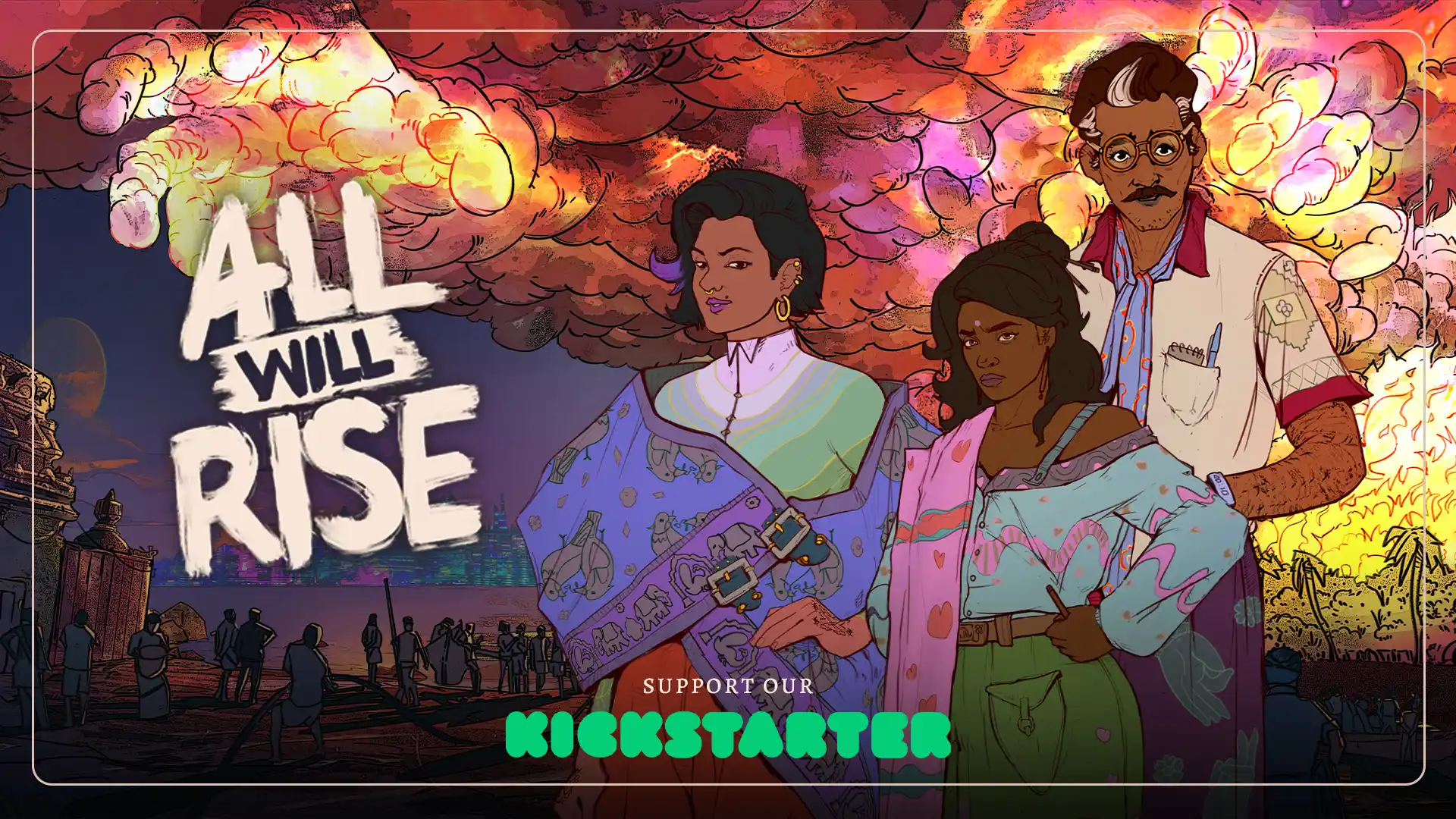
Making of All Will Rise — Explorations & Visual Development
Inspirations — South India and the Craft of Devotion
As an artist, the arts, architecture and culture of South India have always been a deep influence on my visual thinking. From the towering ‘Gopurams’ of temple complexes to the surreal landscape of Hampi, or the intricate stone carvings of the Kailasanathar temple in Kanchipuram and the Meenakshi temple in Madurai; these monuments carry an overwhelming sense of craft and devotion. Their scale alone is ‘magical’. But what moves me more is the attention to detail.
On a visit to the Tiruchirappalli temple complex, I once found myself standing behind a sculpture at a vantage point most visitors would never see. The back of the sculpture, a surface hidden from almost every viewer, was carved with the same attention and detail as the front. Individual strands of hair had been sculpted into the stone. The intricacy and intension of these monuments or their traditions transcends common knowledge. I can only frame the entire experience as ‘Magic’.
It struck me then that these sculptures were not created for visibility or praise. They were created out of devotion to the craft itself. Or a higher spiritual surrender.
And the idea has stayed with me.
When we began thinking about the visual tone of All Will Rise, I realised that the only way to pay homage to such traditions was through immersive detail and sincerity, not spectacle.
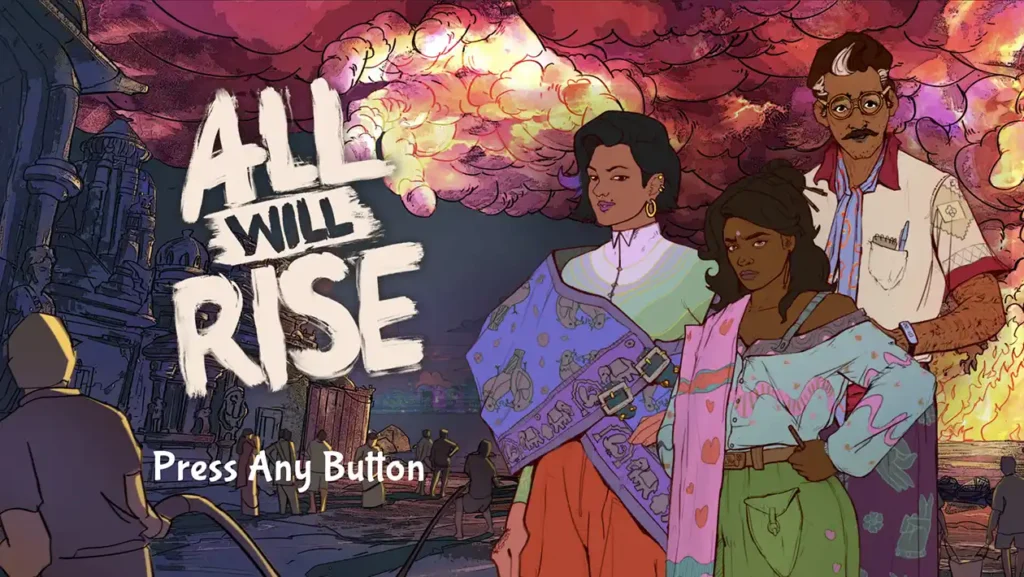
Climate Change and the Deep Future
Now combine the essence of that craftsmanship with the most urgent issue of our time: climate change. And suddenly the project begins to feel like a bridge between the deep past and the deep future. That is the strange emotional territory where All Will Rise lives.
The game imagines a future where societies must reckon with the decisions of our time. Players participate in legal battles that determine responsibility, justice and survival in a changing climate.
It is a serious premise. And also an opportunity for speculative storytelling.
Joining the Project
The fictional city of Muziris, where the game takes place, is set in South India. So when I first encountered the concept, I was immediately interested. Even before I fully understood the depth of the gameplay system, I knew the cultural setting was something I wanted to explore visually.
By the time I joined the team, they had already spent years defining the world of the game. The narrative structure and gameplay pillars were already clear. My task was to find a visual language that could support that world.
There was already an existing style direction, but it needed refinement into something that could work consistently across characters, environments and game assets. I began thinking of the style as a form of speculative realism.
The world of All Will Rise contains elements of fiction, but it also needed to feel believable. The story deals with climate law and political systems; themes that require nuance and a certain seriousness.
This was not meant to feel like a whimsical fantasy card game. It needed weight. And that is where I started.
Style & Concept Development
Like many early creative processes, the first stage involved a lot of experimentation. We explored different levels of stylisation. Some designs leaned toward graphic simplicity while others pushed toward realism.
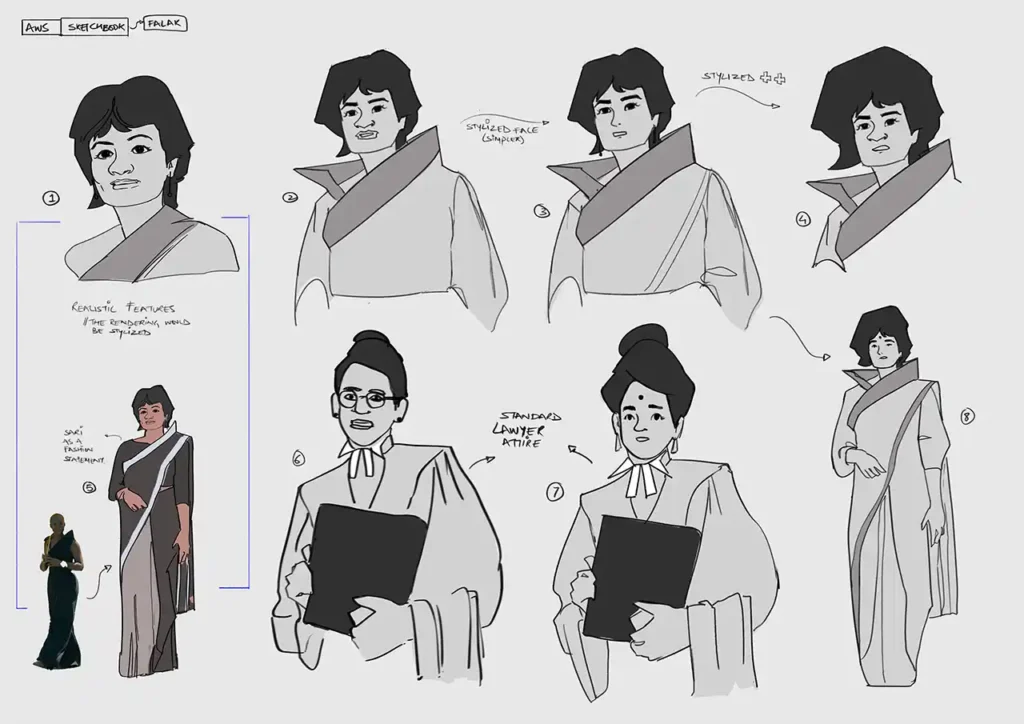
Early character exploration. At this stage the goal was not polish but range — pushing different levels of realism and stylisation.
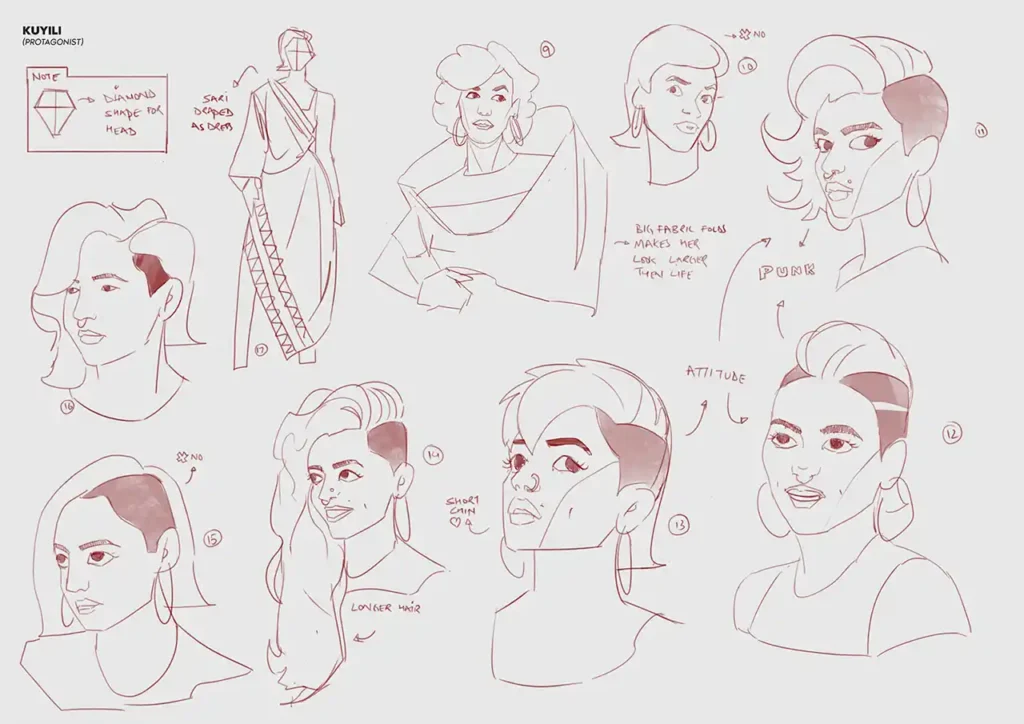
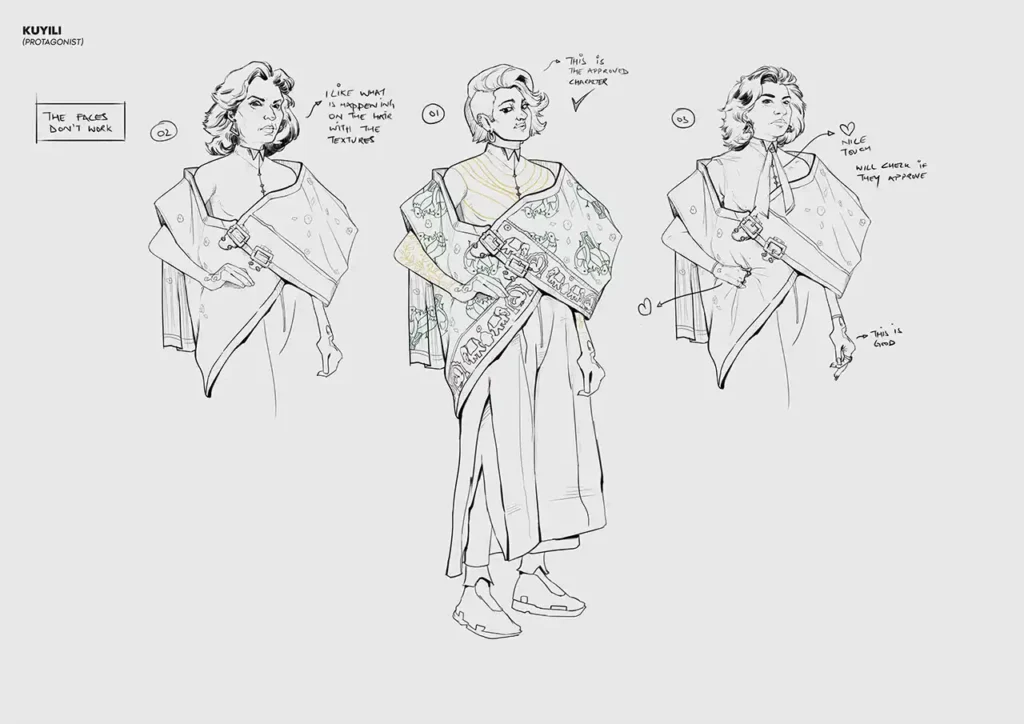
Finding the balance between those two extremes, as you would guess, was surprisingly difficult.
In many ways this is the central problem of visual development. As concept artist and educator Feng Zhu often explains, the early stage of design is less about finding the right answer and more about producing enough visual variations to understand what the problem actually is. Quantity leads to clarity.
Video games often favour a stylised aesthetic that appeals to broad audiences. But for this project I wanted the characters to feel grounded, almost documentary-like. These are people arguing about the future of the planet. Their presence should carry that weight.
Character designer Iain McCaig once described his process as “interviewing the character with a pencil.” I feel, the drawing is not just a picture but a conversation, every sketch asks a question about who this person is and what they believe. And that idea becomes very helpful during this phase. Instead of chasing a fixed art style too early, the focus shifts to understanding the personalities behind the characters.
Over the course of roughly six months, and a multitude of drawings, we slowly arrived at a visual direction that felt right. The first three characters became the foundation for the rest of the cast.
Obviously, a lot of that progress was driven by the team’s writing, which gave the characters strong narrative identities. Once their personalities became clearer, the visual language followed naturally.
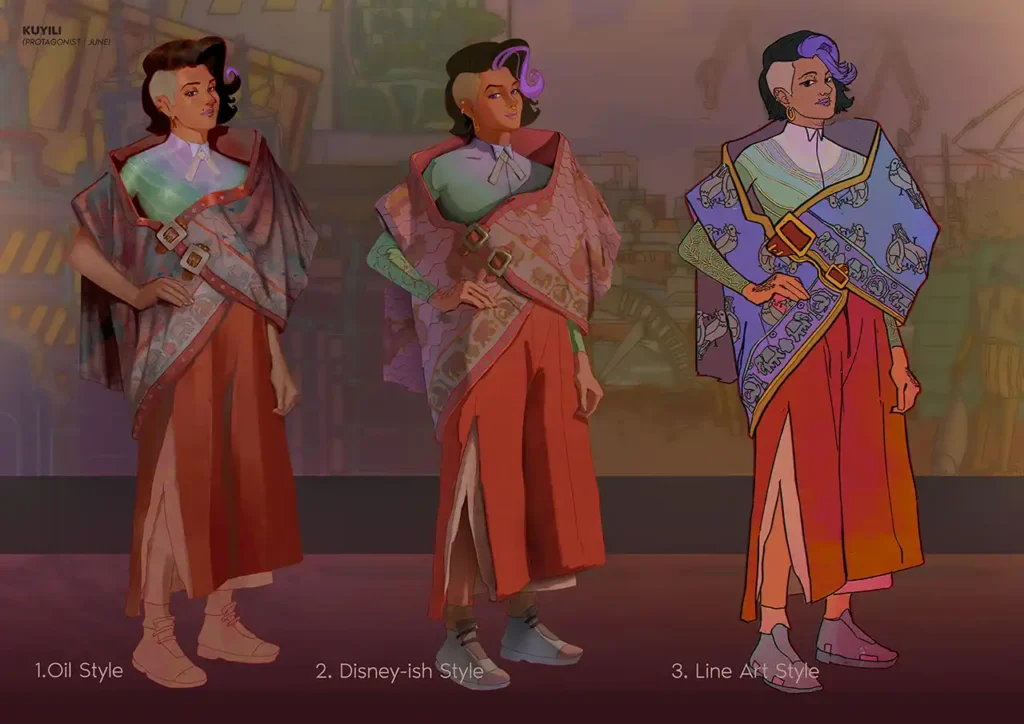
From that point onward, the challenge shifted from experimentation to consistency.
Industrial designer and concept artist Scott Robertson often emphasises that design is not only about creativity but about ‘building systems that can scale’. In a game project that means developing a visual language that multiple artists can understand and apply across dozens of assets. How do you create a cast of characters that feel cohesive while still retaining individuality?
That question guided the next stage of development.
What Comes Next
This article focuses mainly on my personal inspiration and the early visual development behind All Will Rise.
In the next part, I will talk about something equally challenging: designing the first environment of the game, and how we approached building a believable speculative world. Because creating a city like Muziris requires more than just architecture. It requires imagining how people live inside that future.
