
Calm Marketing for Artists
Hello folks,
Over the last few months I have spent more than a hundred hours studying marketing. Podcasts. Articles. Interviews. Strategy breakdowns. You name it. This was not something I expected to be doing. Like most designers and artists, I too believed that good work will eventually speak for itself.
But the reality is different, and the internet has changed the rules of visibility. Today the problem is rarely the quality of the work. The problem is that in this saturated market nobody knows you exist. And if nobody knows you exist, the work might as well not exist either.
“If a tree falls in a forest and no one is around to hear it, does it make a sound?” I guess not.
This essay is a reflection on what I have been learning while trying to market my practice and products, and why I am slowly moving toward something called Calm Marketing.
— Applause Break —

The Problem With “Build in Public”
The phrase build in public is everywhere right now — Share your process. Post consistently. Et cetera. Et cetera.
In theory, this should work well for artists and designers. After all, creative work already has a visible process. But something about the current culture of “building in public” feels off to me. Most of it has quietly turned into another form of hustle culture it seems.
Once again we fall victim to chasing algorithms. Sharing unfinished thoughts not because they matter, but because the platform demands activity. And don’t get me wrong, I do the same sometimes.
But the result is always going to be — Burnout. Both personal and algorithmic!
(Unless you have a team of people, in which case. Why are you reading this?)
The irony is that meaningful creative work almost always requires the opposite pace.
Slow thinking.
Long periods of research.
Deep experimentation.
That’s what it takes!
Hokusai didn’t make the great The Great Wave of Kanagawa because he wanted to post it quickly. Can you imagine that.
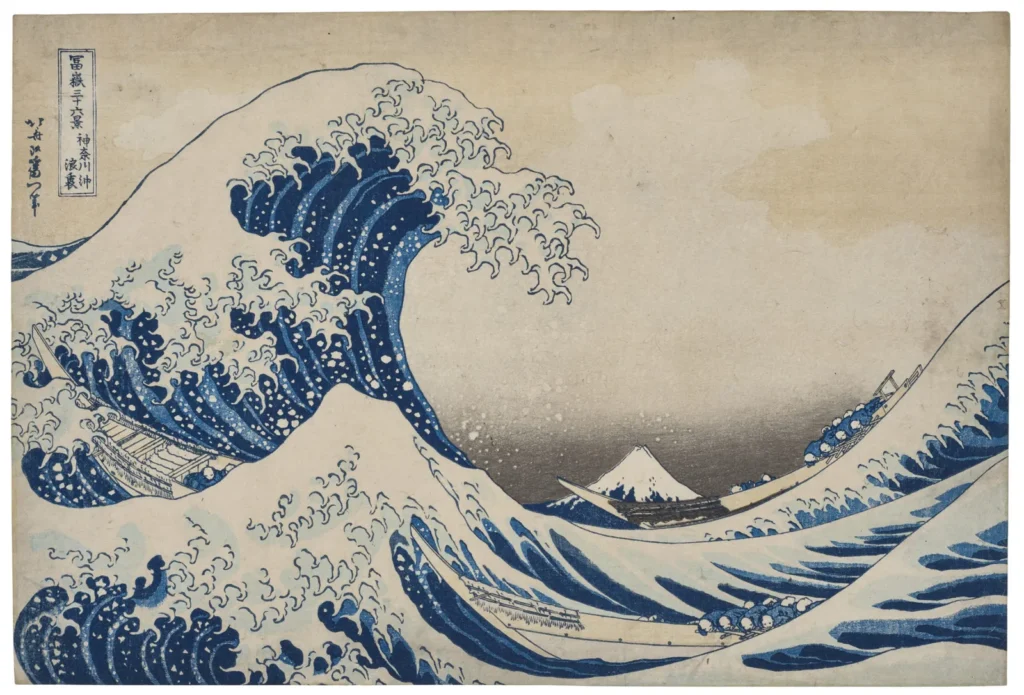
Art or design projects require full immersion for weeks, or sometimes even months, before something coherent comes out of it. Or chaotic, in my case.
So the question becomes. How do you build in public without destroying the conditions required to build meaningful work in the first place?
That question led me toward the idea of calm marketing.
Slow is the New Fast, Babay!
I noticed that there is a quiet shift happening in the creative economy as more and more independent creators are beginning to reject the high-frequency marketing model. This might not be a strategy, but a burnout and a feeling of being jaded. I am not sure. But I am not wrong. (Go figure!)
Loise Stigell and Green Light Studio describe the alternative as a Calm Marketing Strategy. A slower, more intentional approach to visibility that prioritises depth over frequency.
The core idea is simple. Marketing should not feel like panic. It should feel like service. Instead of interrupting people with content they never asked for, calm marketing focuses on creating resources that people seek out intentionally. For example, when I started the research for Mind of My Mind I had no idea that it would resonate with so many people, or that my post on prohibition would actually be searched. But here we are.
I think the difference may sound subtle, but it changes everything. I have noticed that social media often operates through interruption. But if everyone is fucking disruptive then who the fuck is absorbing! Your content appears in someone’s feed whether they asked for it or not. Pervasive-Max!
But ‘Blogging’, on the other hand, is closer to the idea of digital ‘consent’. (My true love!) People arrive when they are curious. They stay if the work is good. And if the work is truly valuable, they return. And that means that the quality of the craft is what drives the goals and not the speed at which I can hurl them at you.
Quality over quantity. Always!
Trust is the Entire Strategy
One of the most useful ideas I encountered came from creator Dan Koe.
He describes brand building as — “Your content, and the quality of ideas you share over a long enough time period, are what create a brand that people cannot help but trust.”
That is the entire strategy.
“Trust.”
Not virality.
Not follower counts.
“Trust.”
This insight becomes obvious when you look at how some of the most successful content-driven businesses started. When Brian Clark launched Copyblogger, he wasn’t a trained marketer. He was a psychology major turned lawyer who had already built several online businesses through experimentation.
His realisation was that what he was doing online wasn’t new at all. He was simply applying the principles of direct response copywriting; headlines, empathy, story structure; to blog posts. Instead of banner ads or aggressive promotions, he focused on teaching people something useful. Over time the blog grew into an eight-figure company. The lesson here is important. Clark didn’t invent anything revolutionary. He applied timeless communication principles to a new medium.
And the same idea applies to artists and designers today. To us. If you can communicate clearly about what you are doing and why it matters, people will eventually find you.
“And I fail at it every day!”, Said I. But hey, I try! Evidence A. Evidence B.

The Algorithm Myth
One of the biggest misconceptions among creators, myself included, is the belief that growth happens through algorithms. For fast unhealthy, unhinged growth. Sure I could agree. I have seen some of my friends blow up. Part chance, part whatever!
You write a few good posts. The algorithm “picks you up.” Suddenly everything changes. But in reality, that is ‘just chance’. If you hurl your proverbial shit on the wall enough times, it will eventually stick I suppose. But that’s like winning the lottery. Statistically, 70% of lottery winners lose their money within a few years.
Actual, real ‘growth’ comes from something much older and much more human. Relationships. Networking. Collaboration. Being present in communities where people already care about similar ideas. If someone with 100,000 followers shares your work, your audience instantly expands beyond your existing network.
For that to happen, there has to be merit in the content. But this builds trust. This is how many creators grow early on. Not through algorithms. Through people!
I saw the power of collaboration and practicing in public just last month when we kicked off the All Will Rise Kickstarter and I spoke at Eyemyth. Almost immediately I received emails with more work. Emails for more collaborations.
Building trust.
I can already see signs of that happening on this website. Earlier my audience would arrive directly through my handle, but now I am showing up in searches. And people want to read the articles/rants.
The Three Forces of Audience Growth
When you look closely at how audiences actually grow, three forces appear repeatedly.
1. People who know and like you
If someone enjoys your ideas, they are far more likely to share them. This is why personality matters. People do not just share information. They share people they believe in.
2. People who see your work
Visibility is often more important than quality in the early stages. A brilliant idea hidden in a notebook helps no one. Distribution matters. So put your work out there in front of your friends and family if no one else. My only advice is, don’t rush it.
3. People growing alongside you
Some of the most valuable relationships are with creators who are rising at the same time you are. As their audience grows, your ideas travel with them. This is less like competition and more like cross-pollination.
The Hub and Spoke Model
One of the most useful frameworks I discovered is called the Hub and Spoke model. It works like this.
Your website or blog becomes the Hub. The central place where your most meaningful work lives. In my case.
Art and Design.
Speculative Stories.
Creative Research.
Long essays.
Projects.
Archives.
Social platforms become the Spokes.
Their job is simple. To point people back to the ‘hub’.
This approach solves several problems at once. First, it protects the work from disappearing inside algorithmic feeds. A blog post can be discovered years later. A social media post usually disappears within hours. Second, it allows you to produce deeper work without worrying about daily posting schedules. Instead of chasing attention, you build an archive. And over time, that archive becomes an intellectual asset.
The Reliable Rhythm
Another important shift in calm marketing is redefining what consistency means. And I struggle with this more then most it seems. For years, I have found it really difficult to keep up with social media. Often giving up on it entirely. Because to me ‘creativity’ trumps marketing. Any day. But they are both equally important. I would not have a business if it wasn’t for marketing.
Where was I wrong though?
Most social media advice equates consistency with frequency.
Post every day. Or multiple days a week.
Stay visible.
Feed the algorithm.
Calm marketing redefines consistency as reliability.
It asks: What rhythm can you sustain without burning out? For some creators that might be weekly writing. For others it might be monthly essays. The important thing is that the rhythm is sustainable. Over time, reliable rhythms build something powerful. Expectation.
People begin to trust that something meaningful will appear again. And when they trust that rhythm, they return. It’s really that simple.
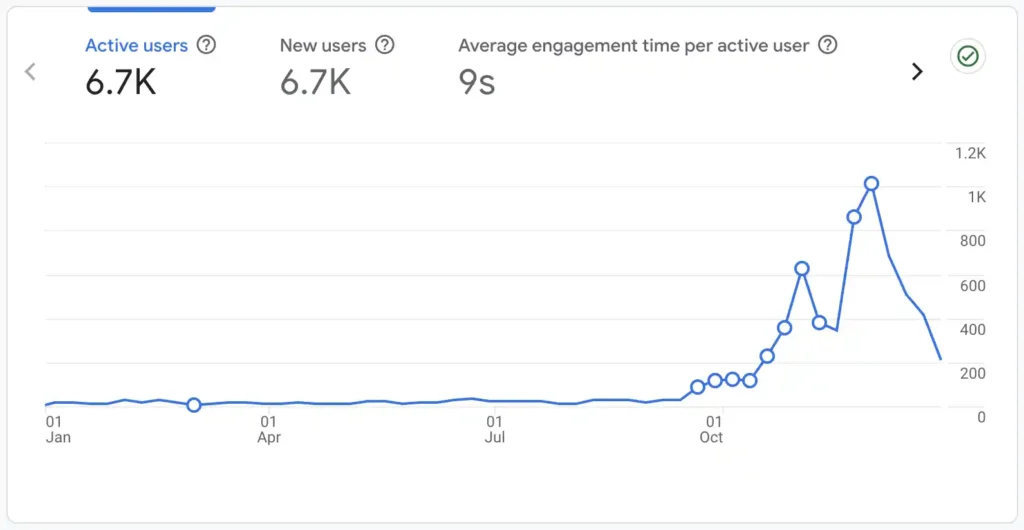
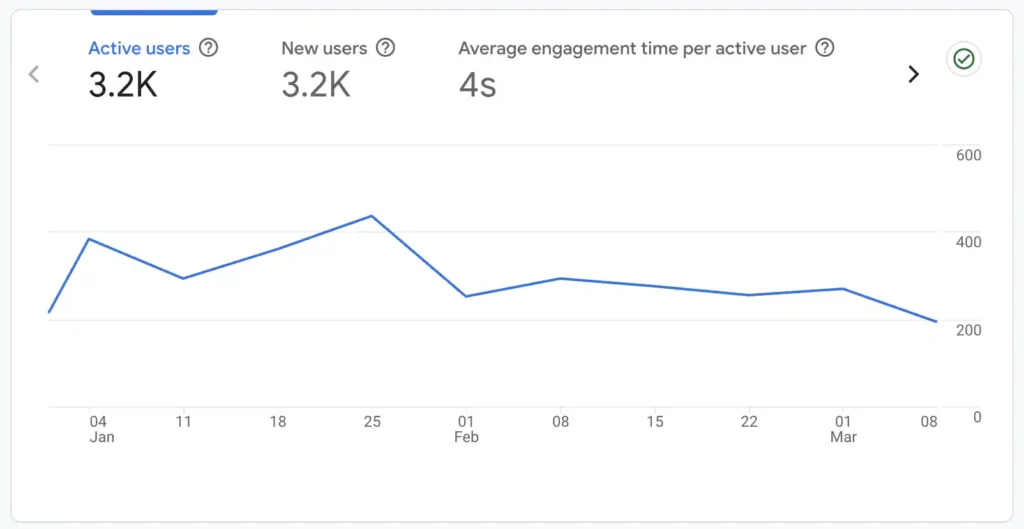
Here is a comparison of the visits to monkeyverse.in for the entire year of 2025 vs January 01,2026 to March 12, 2026
Building a Personal Brand (Without Becoming a Brand)
The phrase “personal brand” makes me so fucking uncomfortable! It sounds so synthetic. The person gets lost in the personal and brand of it. And I am not the kind of person to put my face out there. Just not my vibe. But honestly that is not what it means.
Behind the marketing jargon, a personal brand is just clarity about what you stand for. It’s definitely not my face!
Phewww!
So then what DO you stand for?
If I was to define my pillars on which people can trust me it would be
Concept Art and Worldbuilding.
Speculative storytelling.
Creative research.
And this kind of a rant! (Marketing for creatives.)
So when I do consider Building In Public or Calm Marketing, everything I write or publish should connect back to one of these themes. To create recognizable signals in a noisy environment. My own unique web.
Why Calm Marketing Matters for Creatives
Why I have started to trust this strategy and why other artists and designers might also find it helpful.
In my rusty opinion. The traditional marketing playbook was built for products.
Fast launches.
Clear messaging.
Short attention cycles.
Creative work rarely fits into those structures. (Not in my experience at least.)
It evolves slowly. It requires experimentation. Sometimes the most interesting work takes years to fully develop. It requires a mess and chaos. Creativity is not a linear process.
Calm marketing acknowledges this reality. It treats marketing not as a separate activity but as an extension of the creative process itself. And it respects the slowness that is inherent in the process.
The artist becomes an entrepreneur of ideas
Every practice today is a small media company. And marketing is the act of documenting that journey in the most humble and authentic way possible. In a digital world driven by speed and noise, ‘calm’ itself becomes a competitive advantage.
The biggest shift for me, has been accepting that marketing is not a short-term tactic.
It is a long game. A marathon. Every essay. Every project. Every idea shared publicly. Accumulates.
And when someone spends time inside that archive, they begin to trust your thinking. That trust eventually turns into opportunities.
Collaborations. Clients. And supporters.
But those outcomes are secondary. The real goal is to build a body of work that feels meaningful to share.
Isn’t it?
I’ll give you an example of a really interesting dude I admire, Frankie Harry. He started off really slow and has been honest and transparent about his process. And has shared his joy and suffering really openly. And that authenticity! That is what hooks you in. You don’t need to hook people like grifters!
So go out there and be yourself!

